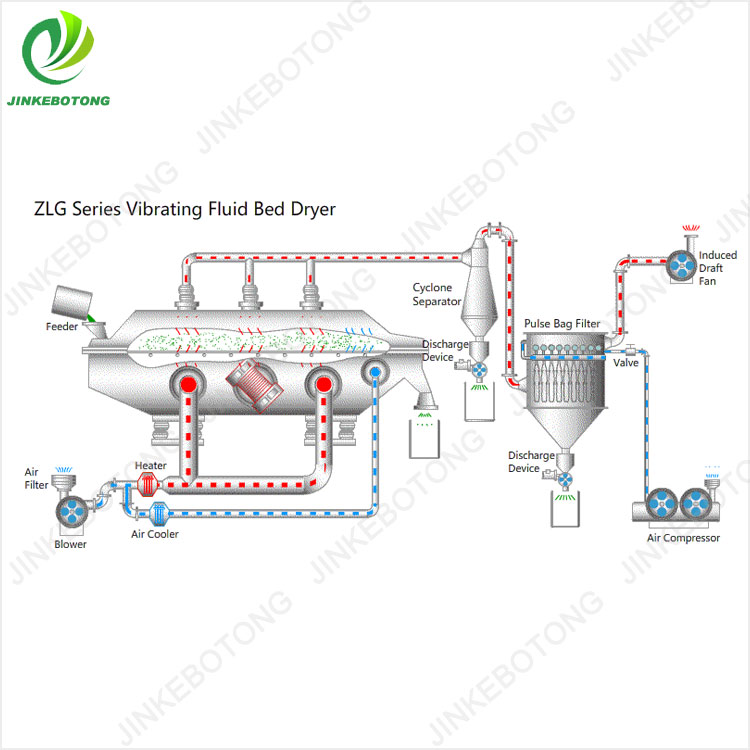
Fluid Bed Dryer: Efficient and Reliable Solution for Industrial Drying Processes The fluid bed dryer is a highly effective and widely used piece of equipment in various industrial applications, particularly in the fields of chemical processing, pharmaceuticals, food production, and material science. Designed to provide rapid and uniform drying, this system utilizes a fluidized bed technology where particles are suspended in a stream of hot air, ensuring maximum contact between the drying medium and the material being processed. This method not only enhances efficiency but also ensures consistent quality throughout the drying process. Key Features of Fluid Bed Dryer One of the most notable features of a fluid bed dryer is its ability to maintain a controlled and stable drying environment. The system is equipped with advanced temperature and airflow control mechanisms that allow precise regulation of the drying conditions. This level of control is essential for maintaining product integrity, especially when dealing with sensitive materials that require careful handling.
Additionally, the design of the
fluidized bed dryer promotes even heat distribution, reducing the risk of overheating or under-drying. Another important characteristic is the high level of energy efficiency achieved through optimized air flow and heat transfer. By using a continuous flow of heated air, the system minimizes energy consumption while maximizing drying capacity. This makes it an ideal choice for industries looking to reduce operational costs without compromising on performance. Furthermore, the modular construction of many fluid bed dryers allows for easy maintenance and scalability, making them suitable for both small-scale operations and large manufacturing facilities. Detailed Description of Fluid Bed Dryer Operation The operation of a fluidized bed dryer involves several key steps that ensure efficient and reliable performance. Initially, the material to be dried is introduced into the drying chamber, where it comes into contact with a stream of hot air. As the air passes through the bed of particles, it creates a fluid-like state, allowing the particles to move freely and increasing the surface area exposed to the drying medium.
This dynamic movement enhances the rate of evaporation, significantly reducing the time required for complete drying. Throughout the process, the system continuously monitors and adjusts parameters such as temperature, humidity, and airflow to maintain optimal conditions. This real-time monitoring ensures that the final product meets the desired specifications, whether it's moisture content, particle size, or overall consistency. The fluidized bed dryer is also capable of handling a wide range of materials, including powders, granules, and flakes, making it a versatile solution for different industrial needs. Applications and Use Cases The versatility of the fluid bed dryer makes it applicable across a broad range of industries. In the pharmaceutical sector, it is commonly used for drying tablets, capsules, and other medicinal products, ensuring they meet strict quality standards.
In the food industry, it is employed for drying ingredients such as spices, dairy products, and snack items, preserving their flavor and nutritional value. In chemical manufacturing, the fluid bed dryer plays a crucial role in the production of fertilizers, resins, and other chemical compounds, where precise drying is essential for product stability. Additionally, the fluid bed dryer is widely used in the production of synthetic materials, such as polymers and ceramics, where uniform drying is critical for achieving the desired physical and chemical properties. Its ability to handle delicate and heat-sensitive materials makes it an indispensable tool in research and development laboratories, where precision and reliability are paramount. User Reviews and Feedback Users from various industries have reported high satisfaction with the performance and reliability of the fluid bed dryer.
Many highlight its ability to consistently deliver high-quality results, even under demanding conditions. Some users note that the system's ease of operation and maintenance contributes to its long-term cost-effectiveness, making it a valuable investment for any facility involved in drying processes. Others praise the flexibility of the fluid bed dryer, which can be adapted to suit different types of materials and production volumes. Several reviews emphasize the importance of the system's advanced control features, which help maintain product consistency and reduce waste. Overall, the feedback reflects a strong appreciation for the efficiency, durability, and adaptability of the fluid bed dryer in diverse industrial settings. Frequently Asked Questions What is the primary function of a fluid bed dryer? The main purpose of a fluid bed dryer is to remove moisture or other volatile components from a material by suspending it in a stream of hot air. This process ensures even and efficient drying, making it suitable for a wide range of applications. How does a fluid bed dryer differ from other drying methods? Unlike traditional drying techniques that rely on static or limited air movement, a fluid bed dryer uses a fluidized bed technology where particles are kept in motion by the passing air.
This results in more uniform heat transfer and faster drying times compared to other methods. Is the fluid bed dryer suitable for all types of materials? While the fluid bed dryer is highly versatile, it is best suited for materials that can be suspended in a moving air stream. It may not be appropriate for very dense or sticky substances that cannot be effectively fluidized. Can the fluid bed dryer be customized for specific applications? Yes, many fluid bed dryers are designed with modular components that allow for customization based on the specific requirements of the user. This includes adjustments to temperature, airflow, and
Material Handling systems. How does the fluid bed dryer contribute to energy efficiency? The fluid bed dryer is designed to maximize heat transfer efficiency by ensuring that the drying medium comes into direct contact with the material. This reduces the amount of energy required to achieve the desired drying effect, making it a cost-effective solution for industrial operations.


 Contact Now
 Jinkebotong Environmental Protection Technology (Jiangsu) Co., Ltd