


 Contact Now
Please Leave Us A Message
Privacy statement: Your privacy is very important to Us. Our company promises not to disclose your personal information to any external company with out your explicit permission.
 Jinkebotong Environmental Protection Technology (Jiangsu) Co., Ltd


Model No.: ZLG
The file is encrypted. Please fill in the following information to continue accessing it

Fluid bed dryer design is an essential component in various industrial processes, particularly in the fields of pharmaceuticals, food processing, and chemical manufacturing. This advanced drying technology utilizes a fluidized bed to ensure efficient heat transfer and uniform drying of materials. The fluid bed dryer is designed to handle a wide range of substances, from powders and granules to delicate particles that require gentle handling. Its versatility makes it a preferred choice for industries seeking High-Quality Drying Solutions that maintain product integrity and enhance production efficiency.
The key features of a fluid bed dryer design include precise temperature control, adjustable airflow, and a modular structure that allows for easy customization based on specific application requirements. These dryers are engineered to operate with minimal energy consumption while maximizing throughput and reducing drying time. The use of high-quality materials ensures durability and long-term performance, even under demanding conditions. Additionally, the system is equipped with safety mechanisms that prevent overheating and ensure stable operation throughout the drying process.
One of the most significant advantages of a fluid bed dryer is its ability to provide rapid and uniform drying. Unlike traditional drying methods, which may lead to uneven moisture distribution or damage to sensitive materials, this technology ensures that every particle is exposed to consistent heat and airflow. This results in improved product quality, reduced processing time, and lower operational costs. The fluid bed dryer design also offers excellent scalability, making it suitable for both small-scale laboratories and large-scale production facilities.
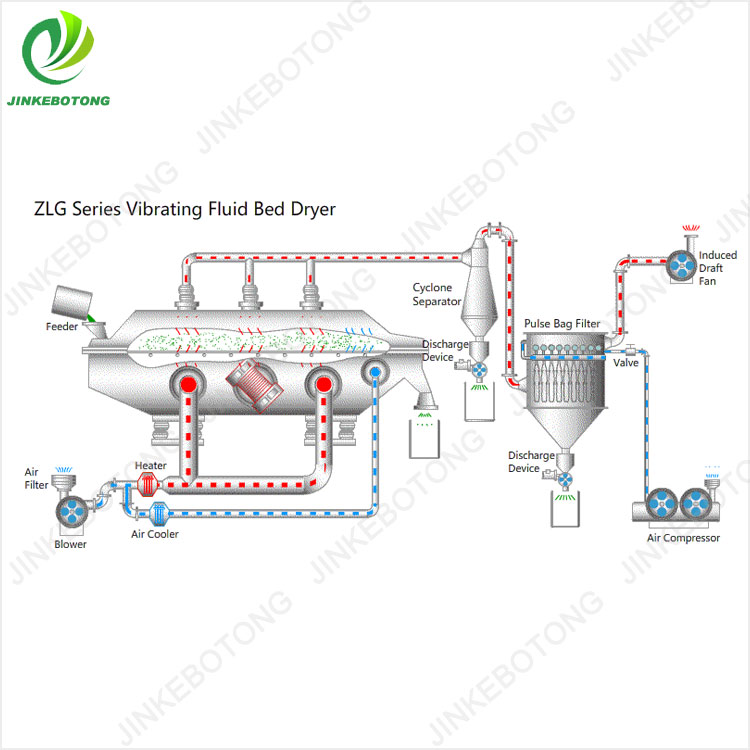
Fluid bed dryers are commonly used in applications such as the drying of pharmaceutical powders, food ingredients, and chemical compounds. They are ideal for processes where maintaining the physical and chemical properties of the material is crucial. For instance, in the pharmaceutical industry, these dryers help preserve the potency and stability of active ingredients. In food processing, they ensure that products retain their flavor, texture, and nutritional value after drying. The design of the fluid bed dryer can be tailored to meet the unique needs of each industry, ensuring optimal performance and compliance with regulatory standards.
Users have reported high satisfaction with the performance and reliability of fluid bed dryer systems. Many have noted that the equipment significantly improves their production workflow, reduces downtime, and enhances overall product consistency. The ease of maintenance and the availability of technical support further contribute to the positive user experience. Whether used in a research setting or a commercial plant, the fluid bed dryer has proven to be a valuable asset in achieving efficient and effective drying outcomes.
When considering a fluid bed dryer, it is important to evaluate factors such as the type of material being dried, the desired final moisture content, and the required production capacity. Customization options allow for adjustments in air flow rate, temperature range, and chamber size to suit different applications. Additionally, integration with existing production lines can be achieved through flexible design configurations, ensuring seamless operation and minimal disruption to ongoing processes.
Common questions about fluid bed dryer design often revolve around maintenance requirements, energy efficiency, and compatibility with different materials. Regular cleaning and inspection are recommended to ensure optimal performance and extend the lifespan of the equipment. Energy consumption can vary depending on the scale of operation and the specific design of the dryer, but modern systems are generally optimized for efficiency. Compatibility with various materials is typically addressed through customizable settings and the use of appropriate construction materials that resist corrosion and wear.


Privacy statement: Your privacy is very important to Us. Our company promises not to disclose your personal information to any external company with out your explicit permission.
Fill in more information so that we can get in touch with you faster
Privacy statement: Your privacy is very important to Us. Our company promises not to disclose your personal information to any external company with out your explicit permission.