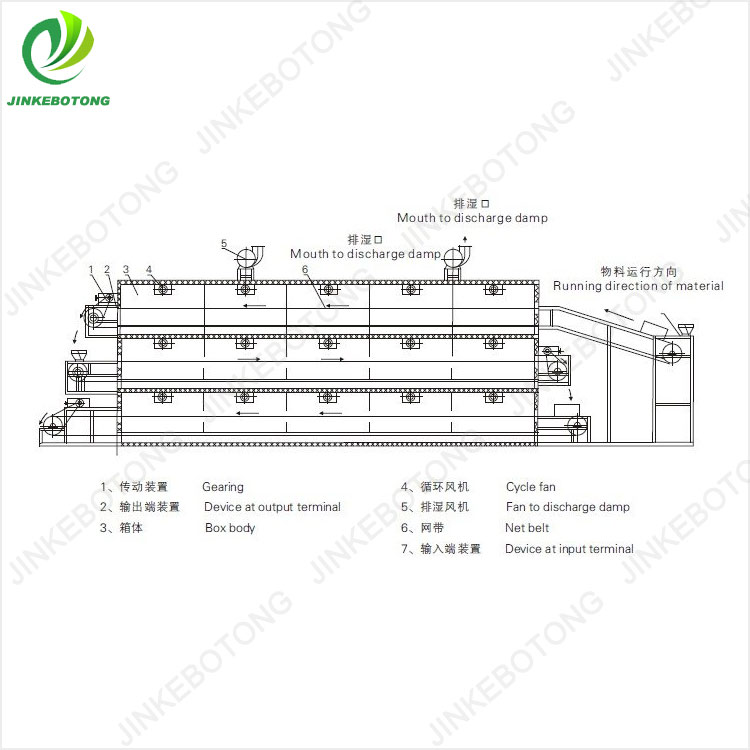
Belt Dryer: Efficient and Reliable Mesh Belt Drying Process for Industrial Applications The belt dryer is a highly efficient and reliable drying system designed to enhance the performance of mesh belt drying processes in various industrial applications. This advanced equipment utilizes a continuous mesh belt conveyor to transport materials through a controlled drying environment, ensuring uniform heat distribution and optimal moisture removal. The belt dryer is ideal for industries requiring high throughput and consistent drying results, such as food processing, pharmaceuticals, chemical manufacturing, and material science. Its robust design and energy-efficient operation make it a preferred choice for businesses seeking to improve productivity while maintaining product quality. Key Features of the Belt Dryer One of the standout features of the belt dryer is its ability to maintain precise temperature control throughout the drying process. This ensures that sensitive materials are not damaged during treatment, preserving their integrity and functionality.
The system also incorporates a durable
mesh belt made from high-quality materials, which can withstand high temperatures and resist wear over time. This makes the belt dryer suitable for both short-term and long-term operations. Another important characteristic of the belt dryer is its modular design, allowing for easy customization based on specific production requirements. Whether the application involves drying powders, granules, or sheets, the belt dryer can be adapted to fit the needs of different industries. Additionally, the system is equipped with adjustable airflow settings, enabling operators to fine-tune the drying conditions for optimal efficiency. The belt dryer also offers a compact footprint, making it an excellent option for facilities with limited space. Despite its size, it delivers powerful performance, capable of handling large volumes of material without compromising on speed or quality. The low maintenance requirements of the belt dryer further contribute to its cost-effectiveness, reducing downtime and operational costs over time. Detailed Description of the Mesh Belt Drying Process The mesh belt drying process is a critical component of many industrial operations, particularly in sectors where moisture content must be precisely controlled.
The process begins with the loading of raw materials onto the mesh belt, which then moves through a series of heated chambers. As the belt travels, the materials are exposed to a controlled flow of hot air, facilitating the evaporation of moisture. This method of drying is highly effective due to the direct contact between the material and the heated air, allowing for rapid and even dehydration. The mesh belt's open structure ensures that air circulates freely around the material, maximizing the drying efficiency. Unlike traditional drying methods that may result in uneven moisture distribution, the belt dryer provides a more uniform outcome, enhancing the overall quality of the final product. The belt dryer can be integrated with additional components such as cooling zones, inspection stations, and packaging units, creating a seamless production line. This level of integration allows for greater automation and reduces the need for manual intervention, improving both safety and efficiency. The system can also be monitored and controlled remotely, providing operators with real-time data on temperature, humidity, and other key parameters.
Use Cases and Applications The belt dryer is widely used across multiple industries, each benefiting from its unique capabilities. In the food industry, it is employed to dry fruits, vegetables, and other perishable items, extending their shelf life while retaining nutritional value. In pharmaceuticals, the belt dryer ensures that active ingredients are properly dried without degradation, maintaining their potency and effectiveness. In the chemical sector, the belt dryer is used to process powders, catalysts, and other substances that require careful moisture control. It is also utilized in the production of ceramics, textiles, and paper products, where precise drying is essential for achieving desired properties. For manufacturers of electronic components, the belt dryer helps in removing excess moisture from delicate parts, preventing damage and ensuring reliability.
The versatility of the belt dryer makes it a valuable asset in any facility that requires a reliable and
efficient drying solution. Its adaptability to different materials and processes ensures that it remains a relevant and effective tool in modern industrial environments. User Feedback and Testimonials Users of the belt dryer have consistently praised its performance, reliability, and ease of use. Many have noted that the system significantly improves their production efficiency, allowing them to meet higher output demands without sacrificing quality. One user from the food processing industry mentioned that the belt dryer has helped them reduce drying times by up to 30%, leading to increased productivity and lower operational costs. Another user in the pharmaceutical sector highlighted the precision of the belt dryer, stating that it maintains consistent drying conditions, which is crucial for producing high-quality medicinal products. A manufacturer in the chemical industry reported that the belt dryer has reduced the need for rework, saving both time and resources.
Many users also appreciate the durability of the mesh belt, noting that it has lasted longer than previous systems they have used. The low maintenance requirements and energy efficiency of the belt dryer have been cited as major advantages, making it a cost-effective investment for businesses of all sizes. Frequently Asked Questions What types of materials can be processed using the belt dryer? The belt dryer is suitable for a wide range of materials, including powders, granules, sheets, and particulates. It is commonly used in food, pharmaceutical, chemical, and textile industries. How does the belt dryer ensure uniform drying? The system uses a continuous mesh belt that allows for even exposure to heated air, ensuring that all materials receive consistent drying. Adjustable airflow settings help fine-tune the process for optimal results. Is the belt dryer easy to maintain? Yes, the belt dryer is designed for minimal maintenance. Regular cleaning and inspection are recommended to ensure continued performance, but the system is built to last and requires infrequent repairs. Can the belt dryer be customized for specific applications? Absolutely. The modular design of the belt dryer allows for customization based on the specific needs of the industry and the type of material being processed. How energy-efficient is the belt dryer? The belt dryer is known for its energy efficiency, thanks to its precise temperature control and optimized airflow system. This helps reduce energy consumption while maintaining high drying performance. What is the typical lifespan of the mesh belt? The mesh belt is made from high-quality materials that are resistant to wear and tear. With proper maintenance, it can last for several years, depending on usage and environmental conditions. How does the belt dryer compare to traditional drying methods? Compared to conventional drying techniques, the belt dryer offers faster drying times, better moisture control, and improved product consistency. It also reduces the risk of overheating and material degradation.


 Contact Now
 Jinkebotong Environmental Protection Technology (Jiangsu) Co., Ltd